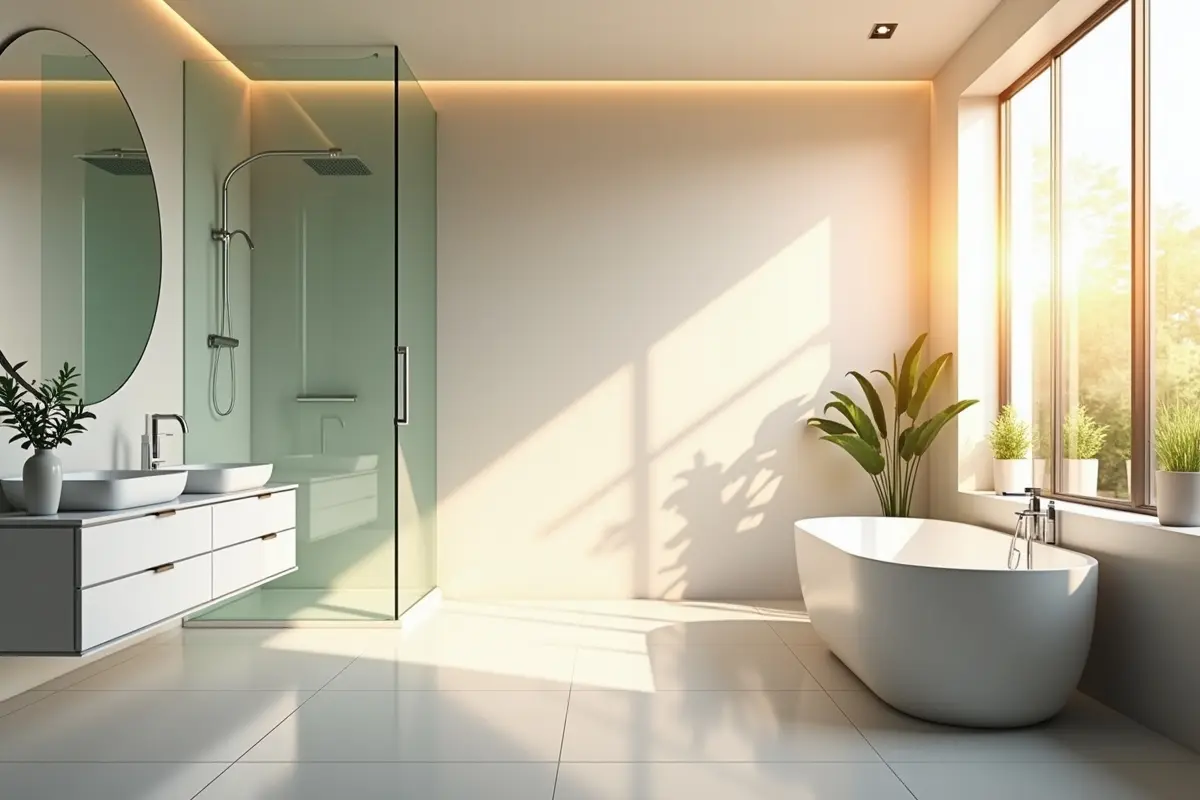
Choosing shower doors is about more than selecting a finish or following a design trend. The right shower door option should fit the room, allow comfortable entry, direct water into the shower, and suit how the bathroom is used every day.
For Lakeland homeowners, a thoughtful choice can be especially valuable in bathrooms that see frequent use and regular humidity. Before selecting glass or hardware, consider the shower opening, nearby fixtures, natural light, ventilation, and the household’s privacy needs.
Start With the Bathroom Layout
The shower’s shape and surrounding floor space should lead the decision. Measure the finished opening width and height, the curb or shower base, wall angles, and the space between the shower and nearby toilets, vanities, towel bars, or storage. A hinged door needs room to swing without striking another fixture or blocking a path.
In a compact guest bathroom, for example, a bypass sliding door or a folding design may be more practical than a wide-swinging door. In a larger shower, a fixed panel or wide pivot entry may create a more open route in and out. Other bathroom elements, including glass and mirrors, can also influence how spacious, bright, or coordinated the finished room appears.
Compare Shower Door Styles
- Framed doors: Visible metal framing supports the glass edges and offers a traditional enclosed look.
- Semi-frameless doors: These use less visible framing while retaining framed components in selected areas.
- Frameless doors: With minimal metal around the glass, these designs can make tile and shower finishes more visible. They require careful measurement and hardware suited to the glass weight.
- Fixed glass panels: A stationary panel can work well in a walk-in layout where the opening and splash path are planned carefully.
- Custom enclosures: Tailored configurations may be appropriate for corner showers, unusually wide openings, or walls that are not square.
Choose an Opening Type
Hinged and Pivot Doors
A hinged door attaches along one side, while a pivot door rotates on pivot hardware positioned near the top and bottom of the panel. Both can provide a broad entry, but their swing path must be checked before installation.
Sliding and Folding Doors
Sliding doors move along a track or rail, making them useful where floor clearance is limited. Folding or bi-fold panels can also save space at narrow entries, although their additional joints and hardware create more areas to inspect during cleaning.
Walk-In and Fixed-Panel Designs
A fixed panel can give a shower a bright, open appearance. The panel location, entry width, showerhead direction, curb height, and splash control all matter because a walk-in design does not seal the opening in the same way as a fully enclosed door.
Select Glass for Light and Privacy
Clear glass allows the most visual connection to the shower tile and can make a smaller bathroom feel less closed in. Low-iron glass is an option for homeowners seeking a more color-neutral appearance. Frosted and patterned glass obscure views more effectively, while tinted glass can add a softer decorative effect.
Choose glass with the room’s lighting in mind. Clear glass may be useful when a shower is dim or when attractive tile is a focal point. Frosted or textured glass can be more suitable where the shower is visible from the bathroom doorway or shared by multiple people. Consider window placement, tile color, and whether privacy or openness is the higher priority.
Review Glass Safety and Hardware
Shower enclosures should use glazing intended for this application. The federal safety standard for architectural glazing materials includes shower doors and enclosures among the covered products. Before work begins, ask about appropriate safety markings, glass specifications, and the planned hardware system.
Hinges, clips, brackets, handles, seals, and wall anchors all have to work together. Hardware should be compatible with the glass thickness, door size, weight, and wall construction. Loose handles, worn seals, damaged glass, or hardware that has shifted should be addressed promptly rather than treated as cosmetic issues.
Plan for Humidity and Maintenance
Warm, humid conditions make moisture management important in Lakeland bathrooms. Showering adds moisture to indoor air, and poorly ventilated bathrooms can encourage the growth of biological contaminants such as mold. The EPA recommends using a bathroom fan that vents outdoors, or opening a window when conditions allow, during and after showering to exhaust moisture.
For easier upkeep, smooth glass is generally simpler to wipe than heavily textured surfaces, while tracks and narrow channels can collect soap residue and debris. A practical weekly routine includes:
- Wiping glass, edges, and handles with a suitable cleaner.
- Removing debris from tracks and checking that the drain flows freely.
- Inspecting seals for gaps, peeling, or discoloration.
- Checking hinges, clips, and handles for movement.
- Running the exhaust fan after showers helps dry the room.
Avoid Common Shower Door Mistakes
- Choosing a door style before checking swing clearance and finished measurements.
- Prioritizing appearance while overlooking cleaning habits and daily access.
- Forgetting that a fixed-panel layout requires intentional splash control.
- Selecting glass without considering privacy, lighting, and tile visibility.
- Installing before tile, walls, curb surfaces, and drainage are ready.
- Assuming every door configuration can stop water without proper seals and placement.
Common Homeowner Questions
What shower door works best in a small bathroom?
Sliding, folding, and compact pivot options are often worth considering because they can reduce the floor space required for a door swing.
Is clear glass hard to keep clean?
Clear glass can show water spots and residue, but regular drying with a squeegee, sensible cleaning practices, and good ventilation can reduce buildup.
Are frameless doors always the best choice?
No. Frameless designs offer a clean, open look, but a framed or semi-frameless option may better fit a particular budget, wall condition, shower shape, or maintenance preference.
Conclusion
The right shower door for a Lakeland bathroom should work with the available space, support safe, comfortable daily use, manage water effectively, and accommodate the homeowner’s privacy and cleaning preferences. Comparing the layout, door operation, glass style, hardware, ventilation, and installation requirements before making a final selection can help create a bathroom that remains practical long after the upgrade is complete.